





Architecture in DC: From Historic Beginnings to Modern Marvels
Washington, DC is the kind of place where architecture isn’t just a feature of the city’s identity, but an extension of it. Here, the streets are lined with homes and buildings that make the District instantly recognizable: think grand limestone facades, storied brick row homes, sweeping front porches, and quietly tucked-away Federal townhouses that have defined entire neighborhoods for generations. From the symmetry of Georgetown’s Georgian homes to the dramatic detail of Dupont Circle’s Victorian facades and the sleek glass buildings on the rise in newer neighborhoods, DC’s architecture is as ingrained in the city’s lore as its history itself. In other words? Every block unfolds like a different chapter, with illustrious craftsmanship reflecting the people, priorities, and periods that have shaped it. This blend of character is precisely what gives each neighborhood its own distinct rhythm and sense of place.
Whether you’re house hunting, relocating, or simply curious about the styles that characterize the capital, understanding DC’s architecture means understanding the city we call home. Here’s a closer look at the residences and buildings that continue to shape Washington today.
Georgian and Federal: DC’s Earliest Foundations
If you’re looking to trace DC architecture back to its roots, the Georgian style is a fitting place to start. Originating in the 18th century, Georgian homes are easy to spot for their symmetry, red brick facades, and understated elegance. Think balanced windows, centered front doors, and a design philosophy that believed less really was more. As the country moved beyond the colonial era, Georgian architecture evolved into the Federal style. Federal homes kept the Georgian knack for symmetry but introduced slightly more refinement, most notably the fan-shaped window above the front door (known as a fanlight). These homes still define some of DC’s most iconic streets.
Where You’ll See It
Georgetown is the gold standard for both Georgian and Federal architecture, with rows of historic brick homes that feel almost untouched by time. Capitol Hill also offers a strong mix of both styles, while landmarks like the White House and Tudor Place showcase Federal style on a grander scale.
For more DC flavor, be sure to check out our:
Victorian Homes: The Row House Era
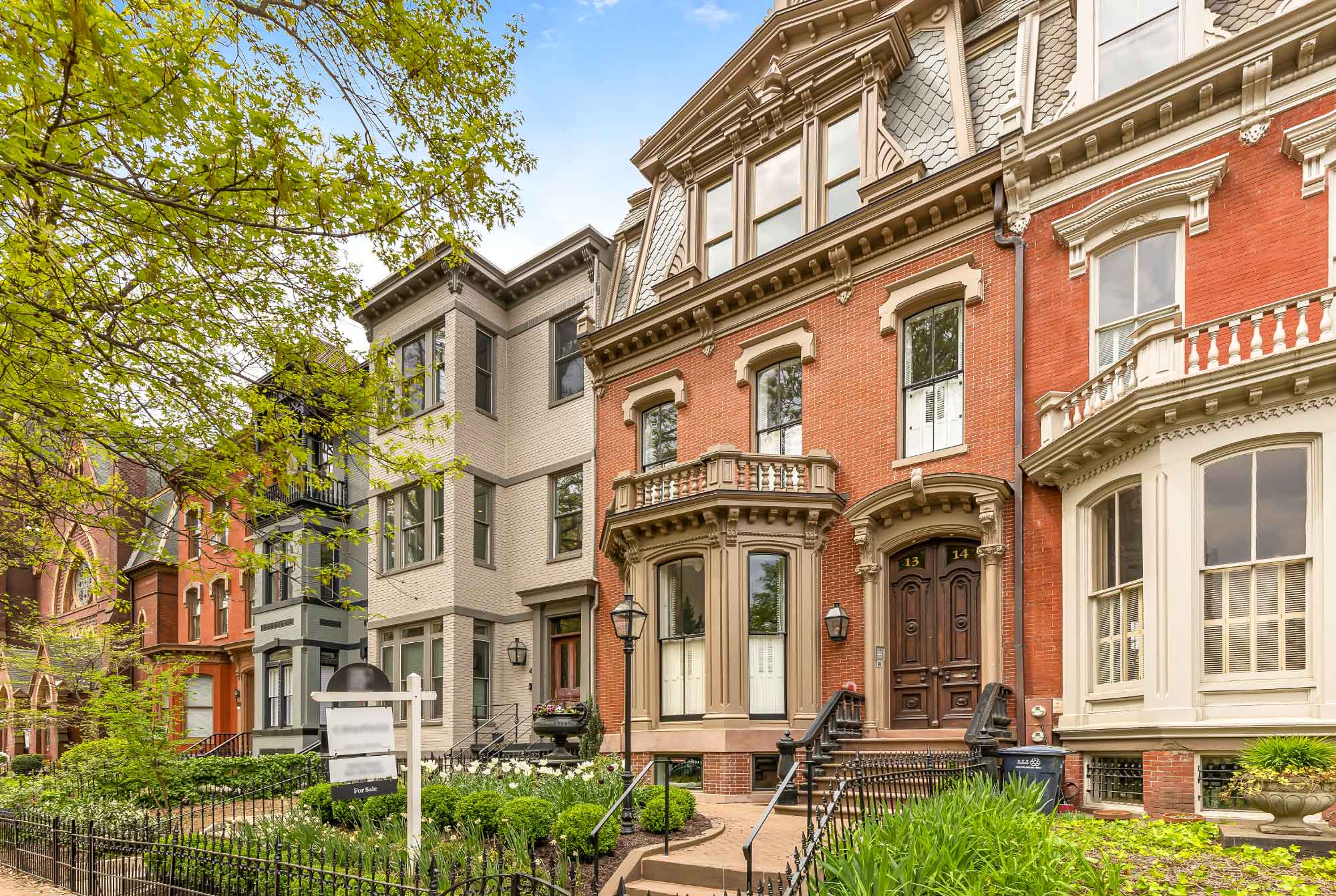
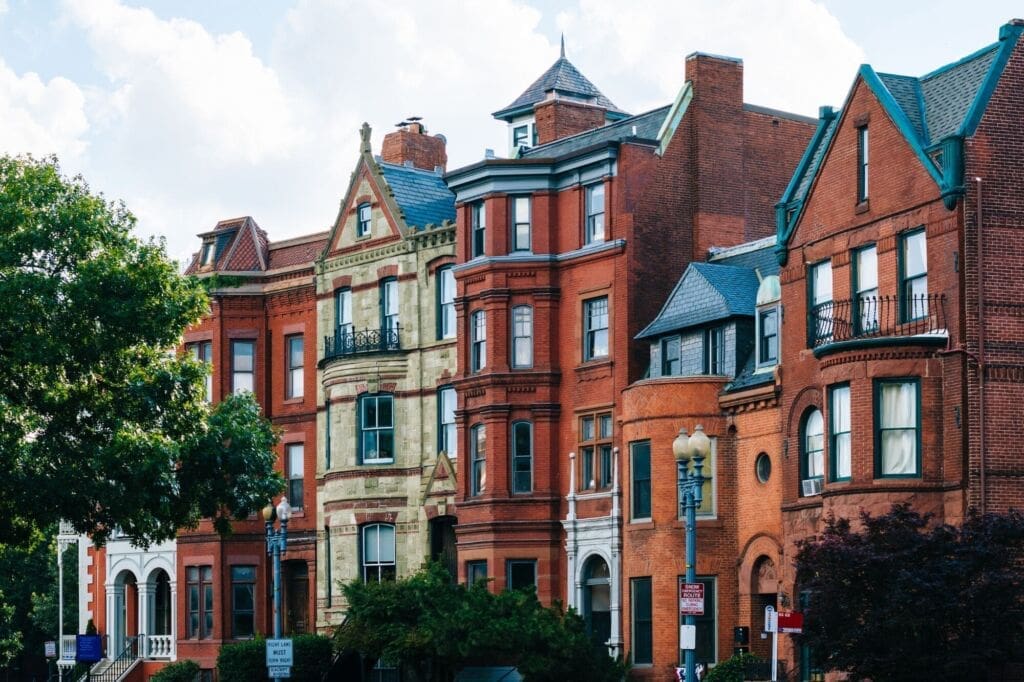
Victorian architecture is what many people picture when they think of classic DC homes: tall & narrow row houses, bay windows, decorative trim, and ornate facades. In other words? A little drama, packaged in the best way. Technically, “Victorian” refers to the period during Queen Victoria’s reign, but in DC, it usually points to the highly detailed, almost moody homes built in the mid-to-late 1800s. These houses brought personality to the city streetscape and remain some of the most sought-after homes today. A standout variation here is Romanesque Revival, known for its heavier stonework, rounded arches, and a more monumental presence.
Where You’ll See It
Logan Circle is especially known for its “gaslight era” Victorian homes, while Adams Morgan and Dupont Circle are full of standout examples. One of the city’s most famous Romanesque Revival homes is Heurich House: proof that subtlety wasn’t always the goal.
Beaux Arts and Neoclassical: DC’s Grand Statement Era
At the turn of the 20th century, architecture in DC got vastly more dramatic. Victorian detail gave way to Beaux Arts and Neoclassical design, styles built to impress with their bright limestone facades, classic columns, decorative detail bordering on gaudy, and the kind of symmetry that practically demands attention. This is the architecture of embassies, museums, and buildings that look like they should come with a staircase scene in a period drama. Beaux Arts in particular became a defining style for many of DC’s grand residences and civic buildings. Some were built fully in this form, while others simply borrowed the aesthetic because, frankly…it looked expensive.
Where You’ll See It
Embassy Row is the obvious starting point, where Gilded Age mansions still dominate entire blocks. You’ll also find iconic examples at the former Carnegie Library, now home to Apple Carnegie Library and the DC History Center, and the National Museum of Natural History.
Learn more about these DC neighborhoods with these posts next:
- What it’s Really Like Living in Georgetown, DC
- What it’s Really Like Living in Logan Circle, DC
- Why Live in Dupont Circle, DC?
The Wardman and The Lindy: Architecture That’s Pure DC
And then there are some housing styles uniquely tied to Washington itself. Enter the Wardman. Named after developer Harry Wardman, these porch-front row homes were designed to house DC’s rapidly growing middle class in the early 20th century. They’re practical, charming, and basically responsible for the reason why people romanticize front porches today. Then there’s the Lindy, a lesser-known but equally DC-specific style. These homes look like traditional Federal-style townhouses from the outside, but were cleverly designed to contain two separate apartments: an early solution to housing affordability and density.
Where You’ll See It
Petworth is the unofficial capital of Wardman homes, while Lindy houses are common throughout Capitol Hill and Adams Morgan.
Modern Architecture in DC: Glass, Steel, and Adaptive Reuse
Of course, DC architecture isn’t frozen in history. Across neighborhoods like The Wharf, Navy Yard, and NoMa, modern design is reshaping the skyline. Imagine glass curtain walls, mixed-use developments, rooftop terraces, and apartment buildings designed around lifestyle amenities as much as floor plans. There’s also a growing focus on adaptive reuse, transforming older office buildings into residential spaces instead of starting from scratch. In a city where history and housing demand constantly collide, the result is a DC that feels layered rather than divided: historic row homes on one block, modern luxury towers on the next. And honestly, that contrast is part of the appeal.
For more reasons to love DC, read our post: What’s So Special About Living in Washington, DC?
Why DC Architecture Feels Different
Unlike cities that grew all at once, DC evolved in chapters. Each neighborhood reflects a specific era, from colonial planning to post-war development to today’s modern reinvention. That’s why no single architectural style represents the city, and it’s this fusion which defines DC instead. It’s also why buying a home here feels so personal. You’re not just choosing square footage; you’re choosing a story, a streetscape, and often a very specific kind of front stoop. In DC, architecture is never just background: it’s a big part of why people fall in love with where they live. And once you start noticing that distinction, it’s hard to stop.
Ready to find your place amongst the city’s storied architectural scene? Get started by filling out the form on this page, calling us at 202.280.2060, or emailing connect@jennsmira.com.

Put Us To Work For You
Book a consultation with our team today.